The Spice Island Connection: How Zanzibar's Cloves Ended Up in Creole Kitchens
There is a moment, just before a pot of rice, stew, or spiced coffee reaches the table, when the kitchen changes.
A clove hits warm oil. Its fragrance opens slowly : sweet, smoky, almost medicinal. Soon, the room smells deeper. More welcoming. Like someone’s grandmother has arrived early to help.
That little brown bud carries a very long story.
It connects Zanzibar to the Moluccas, Oman, India, the Caribbean, and Louisiana. It moves through trade routes, family kitchens, colonial histories, and recipes passed from one generation to the next.
This is the spice island connection.
At Creole Culinary Journeys, we tell these stories because food is never only food. It is memory. It is migration. It is survival. It is a way of saying, “You belong at this table.” 🌍
First, the clove was not originally from Zanzibar
Cloves are the dried flower buds of Syzygium aromaticum, an evergreen tree native to the Moluccan Islands of Indonesia.
For centuries, cloves were among the most valuable spices in the world. Traders carried them across the Indian Ocean and into the Middle East, North Africa, Asia, and Europe. They were used to scent food, freshen breath, prepare medicines, and create perfumes.
The spice was small. Its journey was enormous.
By the early nineteenth century, clove trees had reached the islands of the western Indian Ocean. From there, they were introduced to Zanzibar and Pemba, where the growing conditions were ideal: warm temperatures, rich soil, seasonal rain, and long experience with coastal agriculture.
Zanzibar did not invent the clove.
But it transformed the clove trade.
How Zanzibar became the world’s clove capital
Under Sultan Sa‘id bin Sultan, Zanzibar became a major center of Omani power and Indian Ocean commerce. The sultan recognized the value of cloves and encouraged : sometimes forcefully : their cultivation across Zanzibar and Pemba.
By around 1850, the two islands had become the world’s leading producers of cloves.
The crop changed everything.
Cloves helped fund the growth of Stone Town. They supported merchant networks from Arabia and India. They drew ships, traders, architects, laborers, and families from different parts of the Indian Ocean world.
That mixture shaped Zanzibar itself.
Walk through Stone Town and you can see the story in the details:
- Swahili doors with Indian and Arab influences.
- Courtyards designed for coastal life.
- Mosques, markets, and merchant houses.
- Cooking traditions built around rice, coconut, seafood, and spice.
- Languages and customs formed through centuries of exchange.
The clove trade also carried a painful history. Zanzibar’s plantations depended heavily on enslaved African labor. Any honest story about the spice must hold both realities: the beauty of the cuisine and the human cost behind the commodity.
A spice can be fragrant and still carry difficult memories.
That is why heritage storytelling matters. We do not polish history until it becomes comfortable. We sit with it. We learn from it. Then we ask how food, community, and dignity can grow from the truth.
From Zanzibar’s plantations to kitchens across the ocean
So how did Zanzibar’s cloves reach Creole kitchens?
The answer is not one single ship or one perfectly documented recipe. It is a web of trade.
Cloves moved from Zanzibar through Omani, Indian, Arab, European, and American commercial networks. Ships carried them between ports. Merchants bought and sold them in global markets. Colonial trading systems redistributed spices to different territories and cities.
Zanzibar’s clove dominance meant that many cloves entering international markets during the nineteenth century came from East Africa. Some traveled toward Europe. From European ports, spices moved onward to colonial Caribbean territories and the Americas.
We should be precise here: it would be too strong to say that every clove used in a Caribbean or Louisiana kitchen came from Zanzibar.
But the connection is real.
Zanzibar was part of the same global system that supplied the cloves available to cooks in the Atlantic world. That system connected African plantations, Asian trade routes, European markets, Caribbean societies, and the port city of New Orleans.
The clove in a family recipe may not come with a passport.
Its history does.
What makes a kitchen “Creole”?
“Creole” does not describe one fixed cuisine.
It describes living traditions shaped by mixture, adaptation, and place.
Across the world, Creole kitchens have developed where different peoples met : sometimes through welcome and cultural exchange, and sometimes through displacement, enslavement, and colonial rule.
That is why Creole food looks different from one region to another.
Indian Ocean Creole cooking may bring together African, Arab, Persian, Indian, and European influences. Caribbean Creole kitchens may combine African ingredients and methods with French, Spanish, British, Indigenous, and South Asian traditions. Louisiana Creole cooking grew from African, French, Spanish, Caribbean, Indigenous, and later American influences.
The dishes are not identical.
The deeper pattern is.
Creole cooks take what is available, remember what was carried from home, learn from neighbors, and create something new without losing every trace of the old.
Cloves fit naturally into this story. They are bold but versatile. A little can perfume a pot of rice. It can deepen a marinade, brighten a pickling liquid, warm a dessert, or add character to a drink.
The same spice can taste entirely different depending on the hands using it.
Cloves, nutmeg, vanilla, and pepper: a family of traveling flavors
Cloves are the star of this story, but they traveled alongside other treasured spices.
Nutmeg and mace came from the same broad world of Indian Ocean and Southeast Asian spice commerce. They bring warmth, sweetness, and gentle complexity to sauces, baked dishes, drinks, and festive foods.
Vanilla, native to Mexico, entered global trade through European colonial networks and became closely associated with Indian Ocean islands such as Madagascar, Réunion, and the Comoros. Its floral sweetness found a home in desserts, creams, coffee, and chocolate.
Black pepper, native to South India, has moved through maritime trade routes for thousands of years. It remains one of the most familiar seasonings in kitchens around the world.
These spices tell us something important.
No cuisine develops in isolation.
Food travels with people. It changes when it meets new ingredients, new climates, new beliefs, and new memories. A spice blend is often a small map of the world.

The living clove culture of Zanzibar today
Zanzibar’s clove story is not locked in a museum.
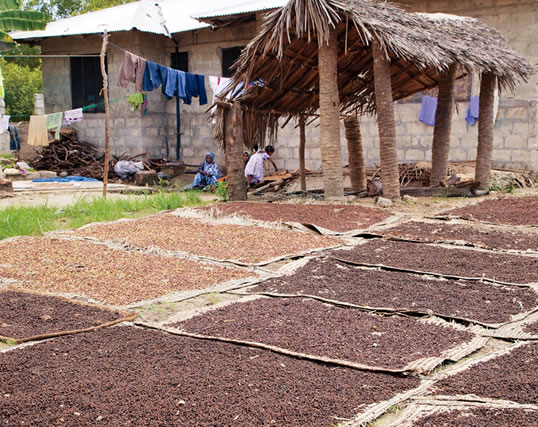
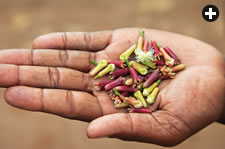
Clove farming continues, especially on Pemba. During the harvest season, workers gather the flower buds by hand. The cloves are sorted and spread out to dry in the sun. As they lose moisture, their color deepens and their sweet, heady aroma fills the air.
The work is physical. It is seasonal. It is often shared by families and communities.
Modern Zanzibar’s economy is more closely associated with tourism than it once was, and global clove production has shifted. Indonesia and Madagascar now produce more cloves than Zanzibar. Still, cloves remain an important agricultural crop and a powerful part of the islands’ identity.
You taste that identity in everyday food.
In spiced rice.
In seafood marinades.
In coconut sauces.
In tea and coffee.
In festive dishes prepared for weddings, religious celebrations, and family gatherings.
You also taste Zanzibar’s wider history in dishes such as Zanzibari pizza, the beloved street-food creation filled with egg, vegetables, meat, or seafood and folded into thin pastry. It is a modern expression of an old island habit: take many influences, make them your own, and feed people generously.
A small kitchen lesson from a very large history
You do not need a complicated recipe to honor this connection.
Try this simple clove-spiced rice:
- Warm a little oil or ghee in a pot.
- Add one or two whole cloves, a piece of cinnamon, and a few black peppercorns.
- Let the spices bloom gently for a few seconds.
- Add rinsed rice and stir until lightly coated.
- Pour in water or stock and cook as usual.
- Remove the whole spices before serving.
Start small.
Cloves are powerful. Too many can take over the dish. The goal is not to make the rice taste like medicine. The goal is to let the spice whisper.
Serve it with coconut beans, grilled fish, roasted vegetables, or a bright tomato salad.
Then pause.
Notice how a few dried flower buds can make an ordinary meal feel connected to coastlines, markets, monsoon winds, and kitchens far beyond your own.
For more ideas, explore our story on spice blends for authentic Creole cooking at home, or continue with our global Creole recipes.
Keep the story moving
A heritage recipe is not a museum object.
Cook it. Question it. Adapt it. Share it with someone younger. Ask an elder how they used the spice. Write down the answer before it disappears.
That is how culinary heritage stays alive.
At Creole Culinary Journeys, we are building a warm, curious community around recipes, stories, classes, and pantry traditions. Join the Culinary Circle for fresh recipes and new spice stories.
Or explore our cooking classes and cooking course when you are ready to cook together.
No pressure.
Bring ur appetite, ur questions, and an open heart. Let’s start the conversation around the table. 🌴💛
Spices, stories, currently in Zanzibar.
Image credits: AramcoWorld, “Zanzibar: Cloves and Stone”; BBC, “The clove harvest in Zanzibar”.